
Will Washington Save Spirit Airlines?

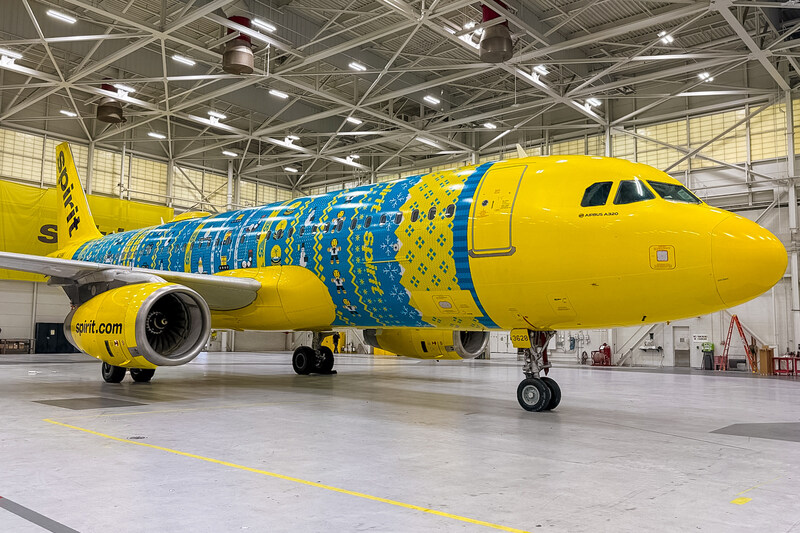
Photo Credit: Spirit Airlines
Subscribe Apple Podcasts | Spotify | YouTube | RSS
Could the U.S. Government shore up Spirit Airlines? Gordon and Jay break down the latest industry chatter about the troubled carrier's future, including fresh commentary from President Trump. Then they shift gears to unpack Alaska Air Group's newest earnings report and what it signals about the carrier's post-Hawaiian merger trajectory.
Watch This Episode:
Transcript of This Conversation
This transcript is generated by artificial intelligence.
Hello and welcome to the Airline Weekly Lounge. I'm your host, Gordon Smith, and I'm joined as usual by co-host Jay Shabat. In this week's show, we're taking two of the most interesting names in US aviation, that's Alaska Airlines and Spirit.
All right, Gordon, how are you?
Doing really, really well.
I feel like we say every week it's busy, but it's especially busy. I think we always assume it couldn't possibly get any busier, any more frantic, but I think the past seven days since we recorded last, I've shown that yes, it can.
Maybe a little bit above average.
I'll say, yeah, if we had a little gauge, it would be, I think, tipping into the orange, if not the red zone, Jay.
A lot of elements that we can discuss, a lot of elements that we could discuss in today's show, but we picked out two airlines in particular for a little bit of a detailed explainer, Spirit Airlines and Alaska.
Alaska, we had the earnings results out of them last night, as we're recording here, April 21st. We'll get on to them in just a little bit. But first, we want to touch on Spirit because it feels like, how far back do you want to go?
Years, really. The word Spirit has always been attached to some sort of drama, be it formal bankruptcy or be it general chatter around the longevity of the brand.
We have had some pretty sobering developments in the past few days, some reports of varying degrees of seriousness. The mood music generally is the same though, this airline is not in great shape.
Give our listeners, give our viewers a quick update on where we are as things stand with the big caveats that this is a potentially quite fast moving story.
1:51
Spirit Financial Crisis
I'm sorry to do this to you, Gordon, but I'm going to make a baseball reference here.
I know some of our listeners will understand my reference here, but some of our listeners know that I am a, I don't know, I don't have a bag to put over my head here, but I am a New York Mets fan.
And the Mets, as we speak today, it's April 21st on Tuesday, and the Mets have lost 11 consecutive games. And their season looks like it might be over one month into a, what is it, a six, seven month season. What does it have to do with Spirit?
Well, I kind of think of Spirit as kind of the New York Mets of the airline industry right now. Their existence might be over. And that's after losing, not games, but a whole lot of money.
And I'll be very specific. In the past four years, 2022, 2023, 2024, 2025, Spirit has accumulated operating losses of $2.1 billion.
Just in the last year alone, I have to peek at the number here, but in 2025, their loss was $896 million at the operating level. That was a negative 24% operating margin.
Gordon, we will, as you know, we're going to run in our Airline Weekly newsletter for the upcoming issue. We're going to run what we call our earnings scoreboard for pretty much every airline in the world that reports their results.
We're going to rank them. And at the very, very bottom with that negative 24% figure is Spirit. So as you mentioned before, Spirit has tried one bankruptcy.
That didn't work, tried another bankruptcy. They were just about ready to exit bankruptcy. They had a turnaround plan, cut their cost, renegotiated their contracts, sliced some debt off their balance sheet, and lo and behold, fuel prices skyrocket.
And their creditors who essentially, you know, anybody that Spirit owes money to and who are essentially in charge of the airline, they're in the driver's seat in a bankruptcy. That's how it works.
Creditors are starting to think maybe this business might be worth more dead than alive.
So we saw this week, and thanks to our colleague Meghna, who sent me the document and discovered this from the bankruptcy proceedings, that Spirit's creditors actually ran a liquidation analysis, which doesn't mean that that's necessarily the option
that they'll choose. But they are certainly looking at the possibility of liquidation, which simply means holding a garage sale, basically. Selling off the airplane, selling off the real estate, selling off whatever assets Spirit has.
So there probably are some creditors that think that might be the best option. Others are maybe holding out hope that, well, maybe fuel prices go down and see what happens.
And then, as you know, I'll turn it back to you, Gordon, but we have a possible alternative scenario now in the mix.
5:04
Trump on Spirit
Well, yes, none other than President Donald Trump was on CNBC's Squawk Box this morning as we're recording here.
And he was asked more broadly around the rumors that have since been shot down by American Airlines, around a possible mega merger that was reportedly floated by Scott Kirby to high levels of government in late February.
We discussed that in last week's podcast. Go back and listen to that if you are not familiar. But President Trump was on Squawk Box for best part of 35 minutes.
And I don't know. I used to work in broadcast TV.
If you had the president phone up and say, I'm happy to speak about anything, or even if you want to speak about whatever he wants to speak about, I would clear the schedules and just let it run and run and run.
So I do wonder whether they were like, I don't know how long we've got with him, whether it's going to be a two-minute soundbite or whether he's going to rant and ramble. But yeah, I bet there was some very happy faces at CNBC.
Anyway, he was asked later on in the conversation, obviously Iran and some other much more important geopolitical issues took the front line of the questions. But in about 25 minutes in, there were some more nuanced questions coming in there.
One of them was around the merger talk or the mega merger talk, or whatever you want to call it, rumors, whatever you want to call it. He said here, quote, I don't mind mergers. I would love someone to buy Spirit, for example.
Spirit's in trouble. It's 14,000 jobs. Maybe the federal government should help that one out, quote unquote.
That's from President Trump himself within the past few hours. Jay, what did you make of that when you heard it?
Well, that follows a report by, I think it was, I think I saw it in both the Wall Street Journal and Bloomberg. I apologize. I don't know exactly who broke that story.
Our own Meghna has written a lot about this as well. The possibility that the government may indeed step in, or at least that Spirit reportedly is asking for help.
I think I also saw something to the effect of multiple low-cost carriers in the US., perhaps maybe even some non-low-cost carriers, asking for some sort of help to deal with the fuel inflation, much like the government stepped in to help during the
COVID crisis. That was of course a much more severe crisis, and one that required a very, very large dose of federal help.
Sorry to jump in, Jay, but that was for equipment from Rome. That was for almost all carriers that wanted it. This is specifically a package for low-cost carriers or ultra low-cost carriers?
We don't know.
The report that I saw was I think a low-cost carriers were, a few of them were banding together, but we don't know. It could be Airlines for America working behind the scenes. We could be, who knows who's talking to whom.
But if Spirit is perhaps asking, it was interesting that the president made those comments. I think I wrote the quote down that you just said here is maybe the federal government should help that one out.
So that's one possible scenario now is that Spirit survives.
He kind of is the federal government though, isn't he?
Well, he's supposed to be one member of the federal government with certain allocated powers. What exactly those powers are may be being redefined, but we'll leave that to the courts and to the other powers that be.
So I don't know to what extent he will exercise which specific powers or whether Congress would have to get involved or whatnot.
But it could be, I mean, to your point, I don't think Congress was involved when Washington purchased an equity stake in Intel.
Remember the big semiconductor company that was having some strategic issue and Washington stepped in and the federal government as we speak owns a piece of Intel. I don't think that's changed since I last checked.
So is Uncle Sam going to be a shareholder of Spirit Airlines? That's not how I thought capitalism is supposed to work, but you never know.
That brings me perfectly on to my counterpoint.
Certainly from this side of the Atlantic, looking in and certainly considering the color of the current administration, you would think it was light touch government, let capitalism do its thing for better and for worse.
Yes, there are going to be casualties in that, but it's not for government to intervene in a general basis.
Obviously COVID, an extreme example, and I think irrespective of who was in the Oval Office at that point or in Congress or Senate, you would have a similar set of circumstances and support package. But this is quite different.
This is a part of the industry that is really particularly suffering because it's arguably more exposed.
Do you really think there's any likelihood of those parties, if they have gone to DC today, to get the begging bowl out and ask for some support, for them to get something?
10:11
Spirit Future Paths
Sure.
You asked me if there's a possibility. I think there have been many things that I wouldn't have thought probable, that have in fact become reality.
Would I be shocked if the president said tomorrow, okay, we're 20% owner of Spirit Airlines, we just gave them a couple of hundred million dollars. Would that shock you any more than some of the other things we've been seeing over the past few years?
I don't know, not really. That becomes one possible scenario, one possible path forward for Spirit Airlines. Another possible path, as I mentioned before, could be liquidation.
Another possible path could be that another airline, hard to believe this would happen, but maybe an Allegiant and says, okay, we really wanna beef up our presence in Florida, and we in Fort Lauderdale in particular, add to our Orlando presence.
We want, yeah, we can use a few more planes, the plane market is tight, and hey, we'll take those Spirit planes. We can use some more pilots. We can use, so yeah, we'll buy it on the cheap, of course, but we'll buy, who knows?
You could see something like that. And of course, the fourth, and I guess, I don't know if this is the only other path, but one other avenue ahead is that they proceed with the original bankruptcy plan.
The creditors say, okay, let's give it a chance. Yeah, fuel is high, but maybe it will come down and the assumptions. I saw, by the way, in the document that Meghna sent us, the assumption on fuel prices, so let me back up.
When Spirit entered bankruptcy, they put together a turnaround plan. And the turnaround plan involves a lot of assumptions about revenues and costs.
And I think what they were, in a very broad sense, trying to do, is become like an Allegiant or Sun Country type airline, which makes total sense.
I mean, those are the two successful business models in the United States, low cost business models in the United States. They've done relatively well over in the post-pandemic period, so why not try to copy them? Makes sense.
Low utilization, low aircraft utilization type model, flying into heavy leisure destinations, et cetera, et cetera.
So as they're putting together this plan, they have to make these assumptions, and one of the assumptions they have to make is, how much is fuel going to cost?
Because we want to kind of give some kind of forecast of how much money we're going to make as we turn the money over the next two, three, four, five years. And I do not have it in front of me, but the fuel cost assumption was very low, I thought.
It was two in the low twos per barrel, whereas, and it was lower than what they paid last year and much, much lower than what they're paying now.
Obviously, they couldn't have predicted where fuel prices have currently landed, but so you can see why creditors might be like, well, this business plan is based on $2.20 per gallon. Well, now we're paying $4.20 or whatever it is.
It's not going to work. But it's still possible that they might give that a try. They might deem that turnaround plan better for their financial prospects from a creditor's perspective than a liquidation, so.
For sure.
Governor Bill, that would be nice.
That would be.
Yeah, yeah, I mean, for sure.
Yeah, you don't know exactly what the terms would be and everything, so. But that could be a bunch of possible paths.
And the last thing I should say, I think this is a very important one, is that with all of this talk, when the President of the United States goes on TV and answers questions about an airline that's in big trouble, it starts to become a
self-fulfilling prophecy. Are you really going to book a Spirit ticket? I mean, I was just playing around on some online booking sites. Their fares are quite a bit cheaper on a lot of itineraries than anyone else.
I mean, hundreds of dollars cheaper in many circumstances, many examples. But are you really going to take that chance that they go out of business tomorrow?
Well, if you pay for a credit card, pay with a credit card, sorry, you'll get your money back, but you might not be able to get to where you want to go, or you might get stranded in Mexico or wherever they fly, Honduras.
So it becomes, if people start getting scared to book them, and then their cash drain gets even worse. So they're in a really, really tough situation here.
I would be surprised if we didn't know what the next, if something, whether it be liquidation or any of those scenarios that I laid out, if we didn't know what those were within days, maybe weeks, but soon.
But soon, yeah. There'll be some cynics listening to the show, Jay, who will say, of course, the government's not going to do anything because this business was in trouble way before the fuel price spike.
This is just the latest additional headache for a company that was already in trouble.
Others who are saying, well, yeah, no, let the process work, let the bankruptcy process push through and maybe, maybe they might just be able to cling on to something here.
We obviously don't have spirit with us to defend themselves, but they do have a website, spiritrestructuring.com, where they do post updates, information resources, etc.
As far as they're concerned, from a consumer point of view, it's business as usual, so people should continue to be happy to book a spirit flight. But of course, the consumer is king and they will vote with their feet.
Like I said, Jay, when you've got the literal president of the United States discussing things on national television around a company's future, it's not great.
And we should also say, of course, there's a human impact as well, not just to the travelers, but also to, as President Trump referenced, the 14,000 jobs there.
So an unsettling time, I'm sure, for many of our listeners who work or are affiliated with Spirit. So keeping you all in our thoughts at this challenging time, no matter what the outcome may be, Jay.
Just before we head into the break, there was another little tidbit from the CNBC Squawk Box interview. That was with regards to United and American. We set the start, he said, I don't mind mergers.
I'd like someone to buy Spirit, for example. But he was much cooler on the prospect of United and American. He said here, quote, but American is doing fine, and United is doing very well.
I don't like having them merge. It's just like those aerospace and defense companies. We still have hundreds of them.
Now we have a very small number, and then you get one bid and it makes them lazy.
Then he went on to a bit of a tangent around aerospace and defense, which we won't go into in this particular podcast, but you can jump on the CNBC website if you want to hear the full interview there, Jay.
But I thought it was interesting that the president said absolutely not. That is not happening on my watch, United and American.
Yeah, that's an important development. That's a significant statement of his to say that he's clearly opposed to it, based on what he said this morning. So yeah, it's right to highlight the significance of that.
Still plenty of room for JetBlue in United, though.
Yeah.
We should have asked him about that.
Well, I would have. I would have. Thirty-six minutes with Donald Trump.
If you want to come on the show, Mr. President, you're more than welcome.
Yeah, you're welcome.
Podcast at skift.com. I get one of your team to reach out. Anything you want to discuss before we head into the break, Jay?
No, let's talk Alaska.
Let's talk Alaska.
Okay. We will get straight back into part two.
Before that, a quick reminder to send any questions or comments that you might have for us to podcasts at skift.com, whether you're the President of the United States or Joe Public, we're very happy to hear from you.
That's podcast with an S at the end. Please don't forget to follow or subscribe to the podcast, whether you're listening or watching.
If you're enjoying the show, please rate us five stars or leave us a post review so we can continue to spread the word about the Airline Weekly Lounge. Don't go anywhere. We'll be talking Alaska Airlines right after this.
18:29
Alaska Airlines Overview
Hello and welcome back to the Airline Weekly Lounge. Gordon Smith joined as usual by co-host Jay Shabat. Part one, we'll be discussing Spirit and some very challenging circumstances for that particular carrier.
Some challenging circumstances of a different sort for Alaska, Jay, because we've had Alaska Airlines, or I should say the Alaska Air Group, as they like to be known now, obviously with Hawaiian under their wing, publishing their Q1 financials in the
past 24 hours here. We haven't had the earnings call yet with Ben and the team, but we have had the core numbers and the presentation. What was your top line take?
I believe the earnings call actually just started.
It's going on as we speak now, so we will be sure to listen to a recording and write up anything interesting that they highlight anything interesting that's said in our newsletter coming up on Monday.
But they did, as you said, release their numbers last day, their first quarter financial results.
So I was able to look through those numbers, and the material that they attached to them, they provided some additional information, commentary on demand and whatnot. So I have a few things to say, even though the call is just starting now.
19:44
Alaska Q1 Results
So the most important takeaway is that Alaska had a pretty lousy first quarter. And right on, Gordon, it's important to distinguish, we're not talking spirit here. Nobody's going out of business in Seattle or anything.
It was a bad quarter.
To borrow frontierism, it's a whole different animal.
It's a whole different animal, exactly. It's a much healthier animal. It's got great balance sheet.
First quarters are always, always weak for Alaska, even in a good year. But in a good year, they might make a little bit of money. Maybe they'll lose a little bit of money.
Negative 7.5% operating margin was what they did in this year's first quarter. So not good at all. They paid $2.98 per gallon for fuel last quarter.
Remember, first quarter included just one month of the spike. So really March was the only month where you had those really elevated rates. So they paid $2.98.
Delta, which they reported a couple of weeks ago as you know, they only paid $2.62. So $2.98 versus $2.62. That is a big gap.
So what you're seeing in the airline industry, I mean, generally in the past, fuel prices didn't vary that much from airline to airline, particularly the US especially.
Even across the world, I mean, obviously there are definitely some countries, Brazil, for example, where the taxes are extraordinarily high on fuel and there's that. But in general, fuel is fuel and what it costs is what it costs.
There's different refining. But right now, it's wildly different between different regions of the world. So in Singapore, for example, which used to be the cheapest place to buy jet fuel, now it's one of the most expensive.
It's more than doubled. And Alaska, interestingly enough, what they would do is they'd actually buy a lot of their jet fuel in Singapore and I believe just ship it over to Hawaii and use it for their Hawaiian operations.
If anybody has any more detail or information on that, please feel free to reach out. I don't know what that operation entails, but I know they sourced a lot of fuel from Singapore, but that's really expensive.
And then West Coast, the US is very expensive too, just because of the refinery situation, pipeline situation. So, that is one reason. I'll turn it back to you, Gordon, but that's just one reason why they had a rough first quarter.
No, I really appreciate the insight, Jay.
Just wanted to give our listeners and viewers a few of the numbers there, because I've got them in front of me, just to support what you were saying around fuel. There's a nice big slide here. Fuel costs have risen sharply.
Hell, that's an understatement if ever I heard one.
But yeah, in the small print here, it says, the Alaska Air Group sources approximately 55% of its fuel from the West Coast, around 20% from Singapore, and around 25% from various other regions, including the Gulf Coast.
But it does note here that West Coast refining margins have been historically more volatile and among the highest globally. Singapore has typically been amongst the lowest cost source until recently surging over 400% since early February levels.
So that little Singapore shortcut is not looking quite so tasty.
Yeah, it makes me kind of wonder what Singapore Airlines is seeing right now. We'll get their earnings sometime in the next couple of weeks, but that's an aside. Back to Alaska.
So that fuel cost obviously was their biggest concern. Their non-fuel costs are also on a unit level, are also starting to be somewhat worrisome.
The reason why non-fuel unit costs are going up, one reason, anyway, important reason, is that, I've said this on the podcast before, Gordon has written about it, I've written about it.
So a long time, well, you'll know this, but worth repeating that a very important weapon that airlines use to lower their non-fuel unit cost is growth. You increase your capacity and you extract a lot of economies of scale.
You fly the planes more, you fly the planes or whatever. So that is getting hard to do when fuel is really, really expensive. You start getting more and more routes that become uneconomical.
So you have to start trimming capacity, which is exactly what Alaska is doing now. So that puts a lot of pressure on their unit cost. You don't have that growth.
I think they're going to grow maybe one or 2 percent in the second quarter. They actually suspended their financial guidance for sure. Maybe their capacity guidance as well for the full year.
So that basically just means, well, we have a big question mark in front of our eyes. Things are so volatile, we can't make any forecast, any reliable forecast anymore for beyond the next quarter.
So yeah, they are trimming their capacity, as most airlines in the world are now doing.
Their domestic capacity, or their North American capacity, so I think that includes Hawaii as well, that is actually going to be shrinking in the second quarter, and the only reason really why they're growing is because they have these new long haul
routes. I think you might have to help me out here, Gordon, but Rome's starting within the next couple of days now, maybe even today this week.
Yeah, Rome, London and Iceland.
And then London and Iceland are next. So that's going to add a lot of growth. That's obviously a lot of available seat miles because it's their long-distance planes, their airplanes with a lot of seats.
So that will help on the Unicast side, flying overseas, but what's it going to be on the revenue side? And that's kind of a big mystery.
Now they said, and again, help me out here, Gordon and interject if you have any exact commentary in front of you, but they basically said that international booking trends, so I think they're talking about these Europe and Asia routes because
they're doing Tokyo and Seoul as well. They've already started those. International booking trends are building in line with expectations. That doesn't sound too reassuring to me.
I don't know.
It depends what your expectation was. You could say it was lousy to begin with.
Yeah, my expectations were that we were going to lose a ton of money on these routes. So being facetious, but yeah, it's true. Those are a little bit flags for me when I see those words, in expectations or things are right along as we expect it.
They also did say that, was it Tokyo? That it made a profit.
I've got it here, Jay.
I can help you out. I'll turn it over to you then. Okay.
I feel like I've done another baseball analogy.
I'm sorry. It doesn't make any sense. But I was going to say, throw me the ball.
I've got it. Maybe more of an American football reference.
Give me a Scottish football analogy. You got something.
You're crossing the ball to me and I'm knocking it into the goal.
There you go.
Here we go. Seattle to Narita, profitable in March with the March load factor on Seattle to Narita and Soinchon above 90 percent.
Another group of words there that's not terribly reassuring. Profit in March. Okay.
What does that mean? What exactly are you including in these profits? Is that an operating profit?
Is the profit including all just cash costs? I mean, there's so many different ways you can calculate profits by allocating different costs, spreading different administrative costs across different routes, whatever. So I don't mean to be down on...
And same thing with the load factor, by the way. I mean, I could fill up a plane 100 percent very easily, just charge a nickel for every seat. I mean, well, no problem is filling planes.
So, again, all I'm trying to say, I'm not trying to hammer on Alaska here.
All I'm trying to say is that we don't really have any good sense of how these new intercontinental, you know, oceanic, trans-oceanic routes will bear out, and they do carry a lot of risk. I mean, these are very competitive routes.
There are routes that can make money, but they could also lose a lot of money. I mean, it's, you know, there's just a lot of, they're very high-cost routes, the flab, you know, giant plane, that long a distance.
So, Jerry is still out there, but, you know, risky. However, they did, what is reassuring, and what is totally, you know, credible and believable is that their corporate revenues seem to be extremely strong, and that's gonna make sense.
I mean, they are, after all, in Seattle. And I was looking this morning when they said that there's a publication called Business Travel News. I assume you're familiar with it, Gordon.
They do a ranking of every year of the leading spenders on business travel, on air travel, different companies. And the number one company in the world based on total amounts spent on air travel is Amazon.
I think it's fair to say that Amazon spends a lot of money with Alaska Airlines. I think we can say that. And then I saw Boeing is actually number eight on the list, another Seattle based company.
And I was looking at this and you can ring the tangent alarm. You can gong me off the show anytime you're up. Do you remember that?
The gong show? This is way before your time, even before my time.
I'll just do what they do at the Oscars. I'll just put the music up and fade you out.
There you go. If I hear the music, I'll shut up. But for now, let me start.
I was a little tangent here. No, the Business Travel News ranking is really cool because I was looking at is actually, if you look at the top 20 or so spenders, three groups stand out. One is the tech companies.
And it makes sense. These are just giant companies with giant profits. And so the tech companies just spend a ton of money on travel.
Another is the consultancies. And some of them have accounting arms as well, like Ernst & Young. Deloitte was actually number two.
So the consultancies, the tech companies. And then a third group was aerospace companies, including Boeing and Lockheed Martin was on the list, and RTX, which owns Pratt & Whitney, they were on the list.
So those three groups, I never really realized that before, but they're just like super heavy in the top 10, 20. So yeah, and Alaska is just getting a lot of that business. They're also pretty big.
They've scaled back in California, but they're still pretty big in San Francisco as well. So they're capturing a lot of that corporate travel there.
So yeah, long-winded way of saying that Alaska's corporate business is really, really strong, it appears, and growing from what was maybe a dip last year.
I think there was a lot of tariff uncertainty last year, where even some of these big and powerful companies were not traveling as much. But that seems to be over now. They're traveling in a large number.
And then on top of that, they also said that the loyalty program is going very well. Big difference, by the way, between JetBlue and Alaska, is Alaska has a very lucrative loyalty program. Don't think JetBlue quite packs that same punch.
That's been a big disadvantage for them. They've been trying to address that, and this partnership with United is one example of how they are trying to address that.
But Alaska does have that great, very lucrative partnership with Bank of America on their loyalty program. Obviously, having Hawaii in their portfolio now is very helpful for loyalty. So, there you go.
I mean, I said corporate was good, loyalty is good, and then premium, you know, that's broken record time. Say it again. Play it again, Sam.
Yeah, I can hear the music coming up now.
Okay, all right.
My thank you speech is done.
Your thank you speech is done. I just was looking at some of the statements that we had from the Alaska Air Group and they say the Atmos Rewards Program, which is what they rebranded it as, seeing, quote, incredible loyalty growth.
So, make of that what you will.
We'll get some more detail and color in the earnings call later, Jay, and like we said at the start of the show, much more detail in the airline weekly issue if you're not already subscribed to airlineweekly.com/subscribe.
We are really getting into the thick of earning season, at least from a US perspective now, Jay. We've got Southwest and American before the week is out. So, a lot more detail, a lot more numbers to crunch before we get to the next issue.
So, look out for that on Monday. Anything to add before we wrap up?
32:29
Alaska Demand Challenges
Yeah, I did neglect to say one thing that's probably important on the revenue side is that they did say that they are experiencing some challenges in Mexico because of some of the bad news headlines there in terms of civil unrest.
And they are also experiencing some demand issues in Hawaii, too, because of some natural, I don't know, natural disasters, right, where they've had flooding, I think, and heavy rains that have deterred some travelers.
So, I think that's an important component of the demand situation as well. But that is all I've got on Alaska. Hopefully, we'll get some more interesting insight as we listen to the replay of that call later today.
And one thing I'll certainly be listening for is more clues on how those intercontinental flights are doing.
I'm not sure how much they'll say, but there's that another important component of their network that they never really say too much about, but which is very important is their trans-cons, transcontinental routes between the East Coast and West
Coast. They're pretty big in that, and that's a very competitive market with JetBlue, with Amerigain, with Delta, with United. It's those big five players. How is the trans-con market doing?
So maybe we'll get some insight from that as well. Well, we'll stay tuned.
Thanks again for your insights, Jay, both on Spirit and on Alaska. Thanks as always to our producers, Sean, Monica and Will, and wherever you are in the world. Thanks for listening and we'll catch you next time.
Bye for now. Whether you're listening to us on Spotify, Apple, or wherever you get your podcasts, please remember to subscribe, rate us five stars, or leave us a positive review.
This really helps us get the word out about the Airline Weekly Lounge so we can continue to bring you this podcast every week, absolutely free of charge.
And if you're watching us on YouTube, be sure to subscribe to the Skift channel and hit the notification bell to find out whenever a new video drops.